- Operating Principle: Step-over Turning Method
- Geometry Definition and Automated Calculations
- Tool Definition and Preparation
- Cutting Strategy and Technological Parameters
- Multi-start Worms and the “Q” Parameter (Mazak Specifics)
- Handling Workpieces Without Undercuts (Entry/Exit Motion)
- Finishing Strategy and Corrections
- Coordinate Systems and Safety (EIA/ISO vs. Mazatrol)
- Project Management and NC Code Generation
Handling Workpieces Without Undercuts (Entry/Exit Motion)
Estimated reading: 2 minutes
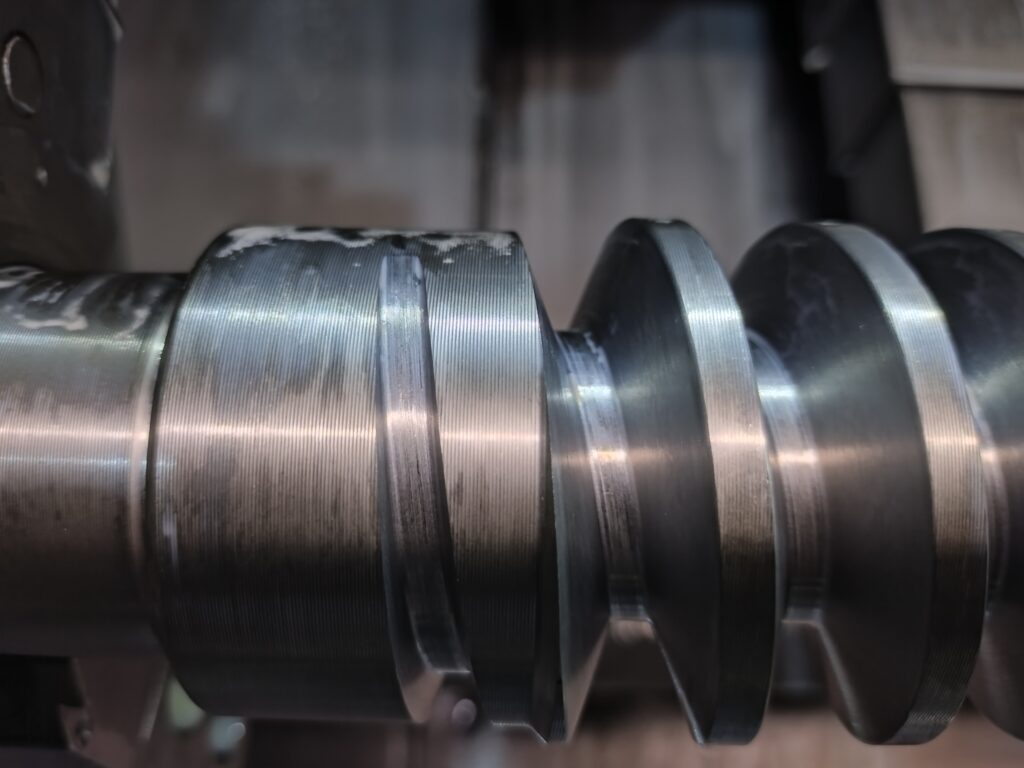
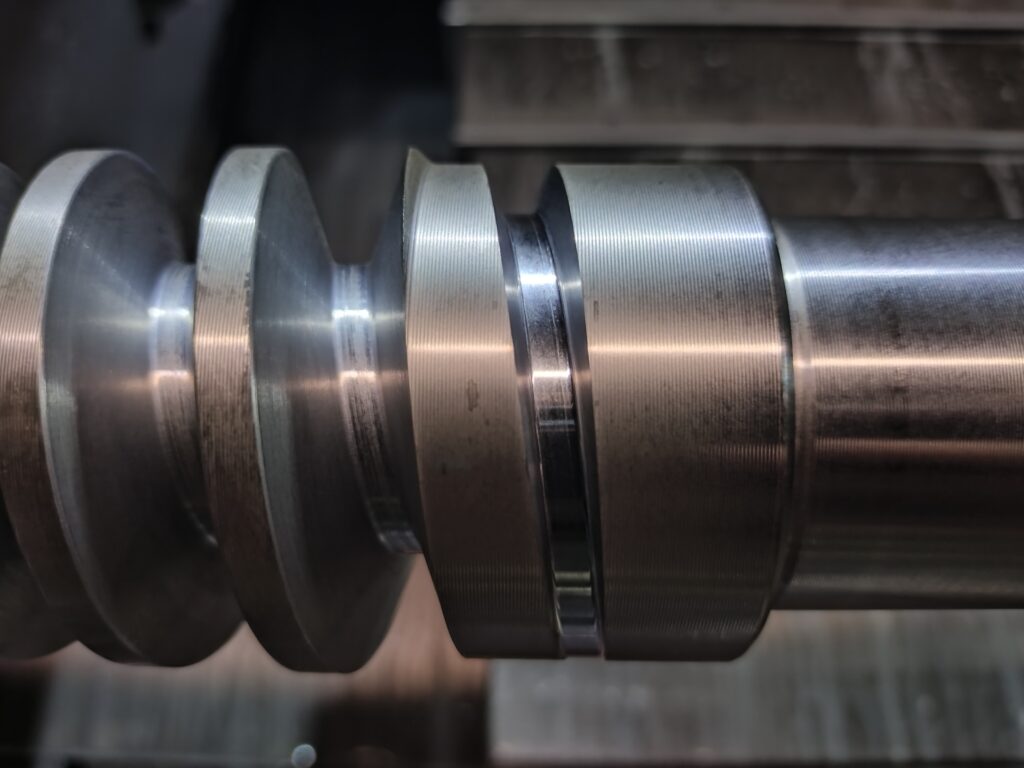
In ideal conditions, a worm has undercuts (reliefs) at its ends, allowing the tool to enter and exit the material freely. However, if your workpiece lacks these features, EvoSpline provides the intelligent Entry motion and Exit motion functions.
The Principle of „Diving and Rising”
These functions allow you to machine worm threads even in solid material. Instead of an abrupt entry to full depth, the software generates specific movements that allow the tool to gradually „dive” into the part or „rise” out of it.
Ramping Angle: The program executes these movements at an angle of maximum 4∘.
Tool Safety: The choice of a 4∘ angle is intentional. Most standard inserts (e.g., VBMT) have a 5∘ clearance angle. By maintaining this safety margin, the tool can cut the material at a slant without the risk of the insert’s bottom face rubbing against the workpiece.
Independent Control and Informational Fields
The entry and exit functions can be activated completely independently using the checkboxes:
- Entry motion: The tool begins „diving” into the material before the actual start of the worm profile.
- Exit motion: The tool begins to smoothly exit the material before reaching the Z-end point.
Good to know:
The numerical values displayed in the fields next to these options are for informational purposes only. They inform the operator of the additional travel distance (Z-axis distance) the tool will cover while performing the ramping motion. This allows you to verify that the tool will not collide with the chuck or the tailstock during the extended approach.