Methodology and Modern Solutions
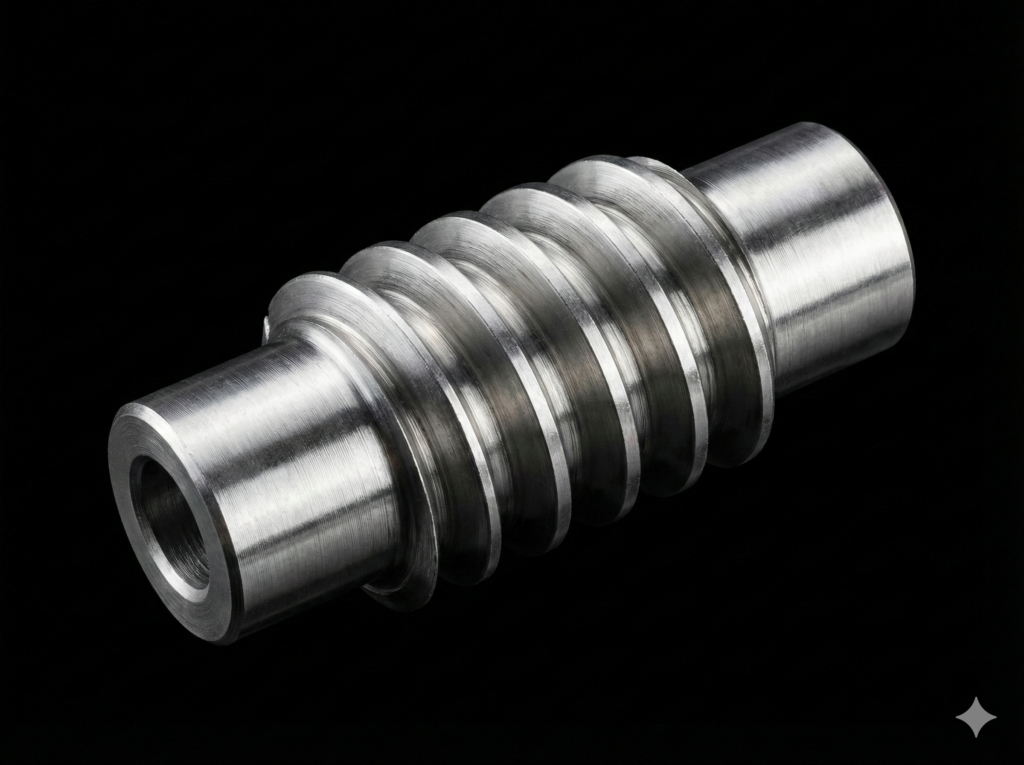
In daily workshop practice, the question often arises regarding the feasibility of efficient and precise worm machining on CNC lathes. While this task may seem complex, the right technological approach makes the process repeatable and predictable. Drawing from years of experience in machining, I would like to outline the key aspects of this operation.
The Foundations: Thread Kinematics
From a technical standpoint, cutting a worm on a CNC machine is a process akin to advanced threading. The most critical parameter to ensure is the correct lead (pitch). On modern control systems, synchronizing spindle rotation with axis feed is a straightforward task, which eliminates the geometric errors once common when setting change gears on conventional machines.
Tool Selection and Profile Geometry
The next stage is achieving the correct tooth shape. Depending on the scale of production and available equipment, two approaches are typically used:
- Using Form Tools: This is the fastest solution but requires a specific modular profile insert.
- Custom Tool Preparation: For non-standard profiles, it is often necessary to grind a custom tool. This requires high precision during grinding to maintain proper relief and rake angles.
Regardless of the tool chosen, selecting optimal cutting parameters is vital. It is important to remember that the large contact area between the cutting edge and the material in form machining generates significant resistance, requiring careful management of feed rates and depth of cut per pass.
A Modern Alternative: EvoSpline NC Generator
I would like to focus on a method that, in my view, redefines the approach to worm production—especially for one-off jobs or prototypes. This involves utilizing the EvoSpline NC Generator software.
This program enables the generation of the worm contour through a technique known as multipass contouring (scanning). In this process, the tooth shape is achieved using standard, widely available tools (such as VBMT radius inserts or grooving inserts) by executing a series of precisely calculated passes.
Advantages of Using EvoSpline NC Generator in Daily Work:
- Tooling Versatility: There is no need to purchase expensive form tools for every worm module. Simple, universal turning tools are used instead.
- Simplicity and Speed of Configuration: The software interface allows for near-instant preparation of the machining technology. The NC code generation process is intuitive, and the final result is fully predictable.
- High Surface Quality: Thanks to the multipass contouring technique, rounded tooth edges are achieved automatically. This is crucial for the durability and quiet operation of the gear.
- Machining Without Undercuts: The program allows for turning worms without the need for technological undercuts (relief grooves). This significantly enhances the rigidity and strength of the entire component.
Summary
Machining a worm on a CNC is not only possible but, with the use of appropriate digital tools, becomes an exceptionally flexible process. While traditional form-tool methods still have their place in mass production, solutions like EvoSpline NC Generator give specialists the freedom they previously lacked, allowing for the realization of complex orders using standard workshop equipment.